

New York Car Insurance: Complete Guide to Coverage, Costs, Requirements, and Ways to Save Money
Choosing the right car insurance in New York can be challenging, especially with different insurance companies, coverage options, policy limits, and premium prices. Whether you live in New York City, Buffalo, Albany, Rochester, Syracuse, or another part of the state, having the right auto insurance policy is essential for protecting yourself financially and legally.
New York has specific car insurance requirements that every registered vehicle owner must understand. Drivers must carry minimum liability insurance, personal injury protection, and uninsured motorist coverage. However, minimum coverage may not provide enough financial protection after a serious accident.
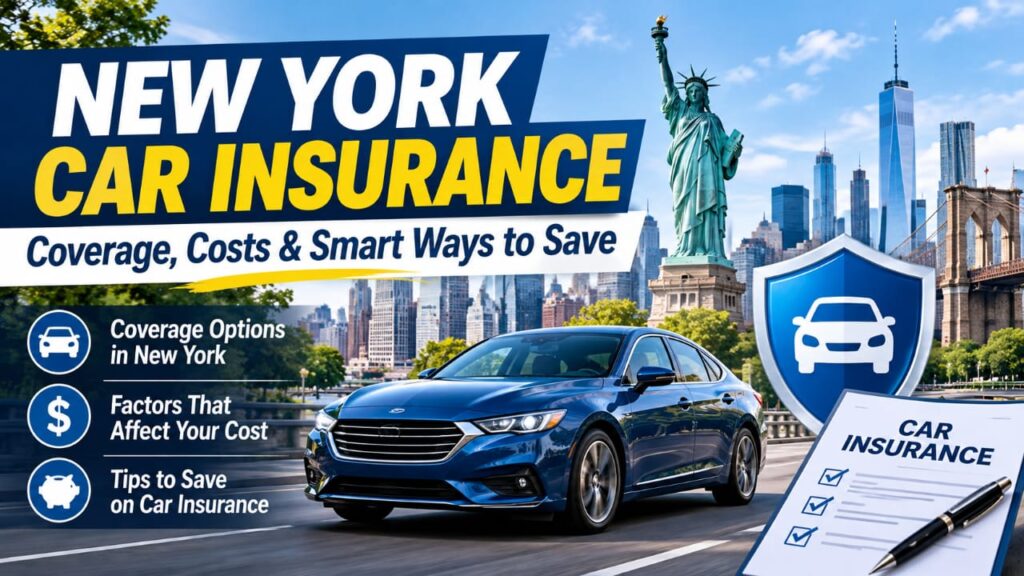
In this guide, we explain how car insurance works in New York, what coverage you need, how much it may cost, what affects your insurance premiums, and how to find affordable car insurance without sacrificing important protection.
Is Car Insurance Required in New York?
Yes. New York requires vehicle owners to maintain continuous automobile liability insurance from an insurer authorized to do business in the state.
If you own and register a vehicle in New York, you generally must maintain the required insurance coverage for as long as the vehicle remains registered. Simply parking your car or not driving it does not automatically remove your insurance obligation.
Driving without valid insurance can result in serious consequences, including:
- Traffic fines and financial penalties.
- Suspension of your vehicle registration.
- Suspension of your driver’s license.
- Additional expenses to restore your driving privileges.
- Potential financial responsibility for damages after an accident.
New York takes insurance compliance seriously. If you plan to cancel your policy, you should understand the DMV requirements first. In many situations, you must surrender your license plates before canceling your insurance to avoid a registration suspension.
What Are the Minimum Car Insurance Requirements in New York?
Understanding New York’s minimum auto insurance requirements is one of the most important steps before purchasing a policy.
New York generally requires the following minimum coverage:
| Coverage Type | Minimum Requirement |
|---|---|
| Bodily injury liability (one person) | $25,000 |
| Bodily injury liability (one accident) | $50,000 |
| Death liability (one person) | $50,000 |
| Death liability (one accident) | $100,000 |
| Property damage liability | $10,000 |
| Personal Injury Protection (PIP) | $50,000 |
| Uninsured motorist bodily injury (one person) | $25,000 |
| Uninsured motorist bodily injury (one accident) | $50,000 |
These are important legal minimums, but they do not necessarily represent the best coverage for every driver.
For example, imagine that you cause an accident involving another vehicle, and the other driver suffers serious injuries. If the medical expenses and other damages exceed your policy limits, you may be personally responsible for the remaining amount.
For this reason, many drivers consider purchasing higher liability limits.
Different Types of Car Insurance Coverage in New York
Not every car insurance policy provides the same protection. Before comparing insurance quotes, you should understand what each type of coverage actually does.
1. Liability Insurance
Liability insurance helps pay for injuries and property damage you cause to other people in an accident.
It generally includes two categories:
- Bodily injury liability: Helps cover injuries to other people.
- Property damage liability: Helps cover damage to another person’s vehicle or property.
Liability coverage does not normally pay to repair your own vehicle after an accident you cause.
2. Personal Injury Protection (PIP)
New York is a no-fault insurance state. This means that after many motor vehicle accidents, your own insurance policy’s Personal Injury Protection coverage pays eligible medical expenses and certain other economic losses, regardless of who caused the accident.
New York’s standard basic no-fault benefit is generally $50,000 per eligible injured person.
PIP may help pay for:
- Medical and hospital expenses.
- Certain lost wages.
- Necessary expenses related to an injury.
- Other eligible economic losses under applicable rules.
No-fault insurance has specific deadlines, eligibility rules, and benefit limitations. For example, accident-related medical expenses generally must be submitted within the applicable filing period.
3. Collision Coverage
Collision insurance helps pay to repair or replace your own vehicle if it is damaged in a collision, subject to your deductible and policy terms.
Examples include:
- Hitting another vehicle.
- Colliding with a stationary object.
- Losing control and hitting a barrier.
- Your vehicle overturning in an accident.
Collision coverage is particularly important if you own a newer or expensive vehicle.
4. Comprehensive Coverage
Comprehensive insurance helps protect your vehicle against certain damages that are not caused by a collision.
Common examples include:
- Vehicle theft.
- Vandalism.
- Falling objects.
- Fire damage.
- Certain weather-related damage.
- Damage caused by animals.
If you live in an area where vehicle theft, severe weather, or other covered risks are concerns, comprehensive insurance may provide valuable protection.
5. Uninsured and Underinsured Motorist Coverage
Unfortunately, not every driver follows insurance laws.
Uninsured motorist coverage helps protect you and eligible passengers if you suffer qualifying injuries in an accident involving an uninsured driver or a hit-and-run driver.
New York requires minimum uninsured motorist bodily injury coverage.
You can also ask your insurer about Supplementary Uninsured/Underinsured Motorist (SUM) coverage, which may provide additional protection when an at-fault driver has insufficient or no liability insurance.
How Much Does Car Insurance Cost in New York?
The cost of car insurance in New York varies significantly depending on your location, driving history, vehicle, age, selected coverage, and insurance provider.
There is no single price that applies to every New York driver.
For example, someone living in Manhattan may receive a different insurance quote from someone living in a smaller town in upstate New York.
Insurance companies evaluate several factors before calculating your premium.
Factors That Affect Car Insurance Premiums in New York
Here are some of the most important factors:
- Location: Drivers in densely populated areas may face higher premiums because of traffic congestion, accident frequency, theft risks, and repair costs.
- Driving record: Drivers with clean driving records may qualify for more favorable rates. Accidents, speeding tickets, and other violations can increase premiums.
- Vehicle type: Expensive vehicles, sports cars, and vehicles with costly replacement parts may cost more to insure.
- Age and driving experience: Younger and less experienced drivers often face higher insurance premiums because insurers generally consider them a higher-risk group.
- Credit-related insurance information: Depending on applicable New York regulations and insurer practices, credit-based insurance scoring may be restricted. Ask the insurer how your information is used.
- Coverage limits: Higher liability limits and additional protection generally increase the premium.
- Deductibles: Choosing a higher deductible may reduce your premium, but you will have to pay more out of pocket when making certain claims.
The best way to understand your potential cost is to compare personalized car insurance quotes from multiple companies.
How to Find Cheap Car Insurance in New York
Finding affordable car insurance does not mean purchasing the cheapest policy available. The goal is to find a policy that provides appropriate financial protection at a reasonable price.
Here are practical ways to reduce your insurance expenses.
1. Compare Multiple Car Insurance Quotes
Never assume that one insurance company will always offer the lowest price.
Different insurers use different underwriting methods and pricing models. As a result, two companies may offer significantly different premiums for similar coverage.
Request quotes from multiple providers and compare:
- Monthly and annual premiums.
- Liability coverage limits.
- Deductibles.
- Collision and comprehensive coverage.
- Available discounts.
- Customer service and claims handling.
Make sure you compare similar policies rather than choosing a company based only on its advertised price.
2. Ask About Available Discounts
Insurance companies may offer discounts to eligible customers.
Depending on the insurer, these may include:
- Multi-policy discounts.
- Multi-vehicle discounts.
- Safe-driver discounts.
- Defensive-driving course discounts.
- Low-mileage discounts.
- Certain vehicle safety-feature discounts.
- Payment-related discounts.
Ask the insurance company which discounts are available in your specific situation.
3. Choose an Appropriate Deductible
A deductible is the amount you pay toward an eligible covered claim before your insurer pays the remaining covered amount.
For example, suppose your collision deductible is $1,000 and your covered repair costs are $4,000. You generally pay the first $1,000, and the insurer pays the remaining $3,000, subject to the policy terms.
A higher deductible can reduce your premium, but you should only select an amount you can comfortably afford if an accident happens.
4. Maintain a Clean Driving Record
Your driving history can influence your insurance costs.
Avoiding speeding violations, distracted driving, and preventable accidents can help you maintain a better insurance profile.
Some insurers also offer programs that reward eligible safe-driving behavior.
5. Review Your Policy Regularly
Your insurance needs can change over time.
You may purchase a different vehicle, move to another area, change your annual mileage, or pay off your car loan.
Reviewing your policy at renewal can help you identify unnecessary coverage, missing protection, and potential savings.
However, avoid removing important coverage simply to reduce your monthly bill.
Best Car Insurance Companies to Compare in New York
New York drivers have access to several established auto insurance providers.
Some companies worth including in your comparison are:
1. GEICO
Offers auto insurance products and online quote services. Drivers can explore available coverage options and discounts.
2. State Farm
Provides automobile insurance and agent-based support. Customers can request quotes and review different policy options.
3. Progressive
Offers online insurance quotes and tools for comparing coverage choices.
4. Allstate
Provides several auto insurance options, with coverage and discounts depending on eligibility.
5. Travelers
Offers automobile insurance and additional coverage options for eligible customers.
6. USAA
Provides insurance services primarily to eligible military members, veterans, and qualifying family members.
There is no universal winner among these companies. The best insurer depends on your location, driving history, vehicle, coverage requirements, budget, and customer service preferences.
Before purchasing a policy, check the insurer’s current availability, coverage details, financial strength, complaint information, and claims reputation.
What Happens If You Drive Without Car Insurance in New York?
Driving without the required insurance can create serious legal and financial problems.
New York requires continuous insurance coverage for registered vehicles, and the DMV receives electronic insurance information from insurers.
If your insurance company reports that your coverage has ended, the DMV may take action against your registration.
Penalties for Driving Without Insurance
Possible consequences include:
- Vehicle registration suspension.
- Driver’s license suspension in applicable circumstances.
- Financial penalties.
- Reinstatement fees.
- Additional legal complications.
If you are involved in an accident without insurance, you may also face substantial personal financial liability.
If your insurance policy is canceled or expires, contact your insurance company immediately and follow the New York DMV’s instructions.
How to Choose the Right Car Insurance Policy
Selecting the right policy requires more than comparing monthly premiums.
Start by identifying your financial responsibilities and the value of your vehicle.
If you own an older vehicle with a relatively low market value, you may decide that paying for collision and comprehensive coverage is not worthwhile. However, consider the cost of replacing the vehicle yourself before making that decision.
If you own a newer vehicle or still have an outstanding auto loan, additional protection may be particularly important. Your lender may also require collision and comprehensive coverage.
Questions to Ask Before Purchasing Car Insurance
Consider these questions before purchasing:
- Does the policy satisfy New York’s minimum insurance requirements?
- Are the liability limits sufficient to protect my finances?
- Does the policy include collision and comprehensive coverage?
- What deductible can I comfortably afford?
- Are there exclusions or limitations I should understand?
- How does the company handle accident claims?
- Are there discounts that could reduce my premium?
Read the policy documents carefully and ask the insurer to explain anything you do not understand.
Frequently Asked Questions About Car Insurance in New York
Is car insurance mandatory in New York?
Yes. New York requires registered vehicle owners to maintain continuous liability insurance from an authorized insurer. Additional mandatory coverage requirements also apply.
What is the minimum liability insurance in New York?
The standard minimum bodily injury liability limits are $25,000 per person and $50,000 per accident, with $10,000 in property damage liability coverage. Higher limits are often worth considering.
Is New York a no-fault car insurance state?
Yes. New York follows a no-fault insurance system. Personal Injury Protection generally pays eligible medical expenses and certain economic losses regardless of who caused an accident.
Can I drive someone else’s car in New York?
You may be able to drive another person’s vehicle with permission and appropriate insurance coverage. However, coverage depends on the policy, vehicle ownership, driver circumstances, and applicable law. Always confirm coverage before driving.
Does car insurance cover theft in New York?
Comprehensive coverage generally helps pay for a covered vehicle theft, subject to your deductible and policy terms. Standard liability insurance does not cover theft of your own vehicle.
How can I get affordable car insurance in New York?
Compare quotes from several insurers, ask about discounts, maintain a clean driving record, review your coverage, and choose an appropriate deductible.
Do I need full coverage car insurance in New York?
New York does not generally require every driver to purchase collision and comprehensive coverage. However, a vehicle lender or leasing company may require both. These coverages can also provide valuable financial protection.
Conclusion
Finding the right car insurance in New York is an important part of responsible vehicle ownership. Understanding the state’s minimum insurance requirements, comparing different coverage options, and evaluating insurance companies can help you make a more informed financial decision.
Although choosing the cheapest policy may seem attractive, inadequate coverage can expose you to significant financial losses after an accident.
Take time to compare multiple insurance quotes, review policy limits, ask about available discounts, and select coverage that matches your financial situation.
Whether you drive in New York City or a smaller community elsewhere in the state, the right auto insurance policy can help protect your vehicle, finances, and peace of mind.
Disclaimer: This article is for educational and informational purposes only. Insurance premiums, eligibility, coverage terms, and state regulations can change. Always confirm current requirements with the New York Department of Motor Vehicles, the New York Department of Financial Services, and your insurance provider before purchasing a policy.

नमस्कार मंडळी, मी मोहित पाटील वाचनाची आवड असण्यासोबतच मला लिहायलाही आवडते. आणि म्हणूनच मला मिळालेल्या फावल्या वेळचा सदुपयोग म्हणून मी हा ब्लॉग लिहित आहे. तुम्हाला माझे लेख कसे वाटले comment करून नक्की सांगा. माझे Instagram आयडी 👇